Av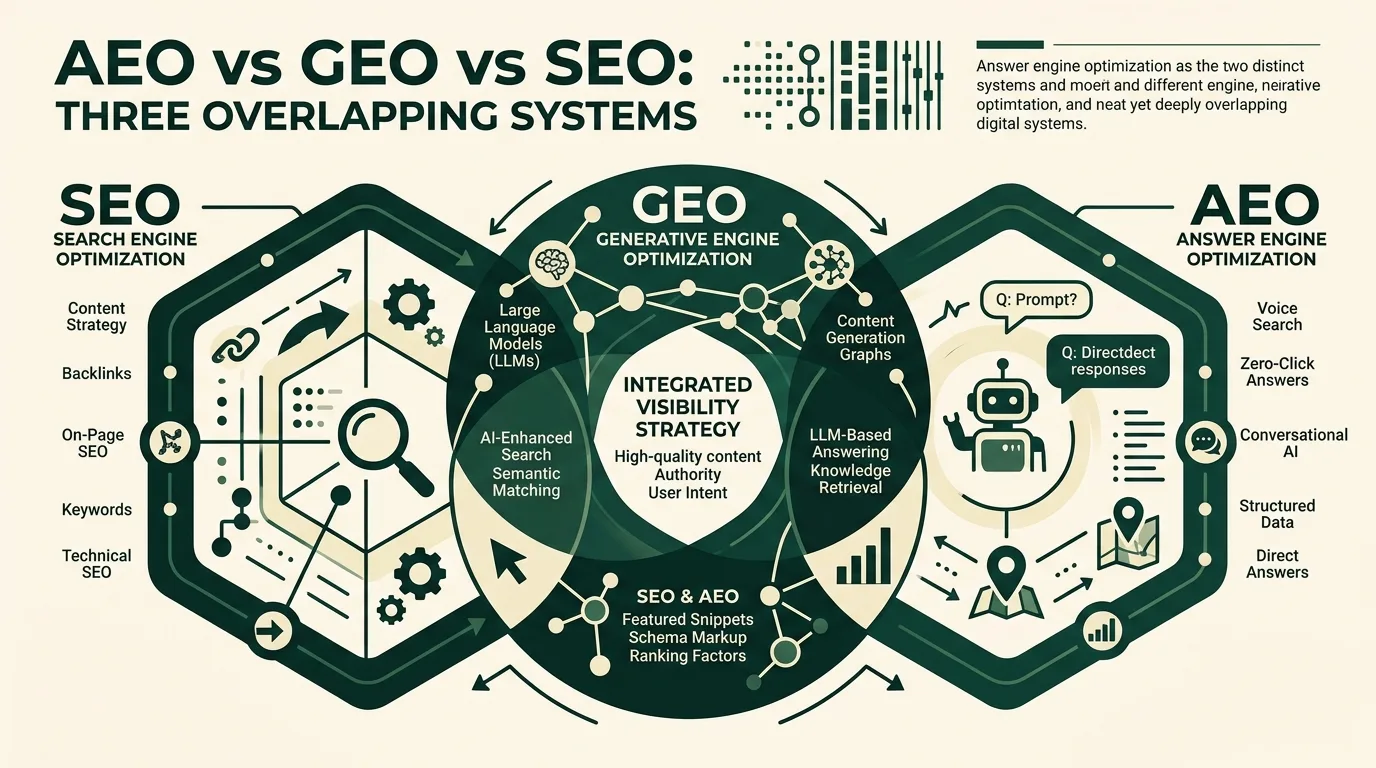
Digital Strategy · 2026-10-09 · 5 min read
SEO improves visibility in search results, AEO improves the clarity and extractability of answers, and GEO improves the evidence, entity signals, and representation that can help generative systems cite or describe a brand accurately. In practice, all three rely on crawlable, useful, trustworthy, well-structured content.
CS
Digital Strategy · 2026-10-01 · 5 min read
Publishing more content is not a strategy. A stronger content strategy decides which customer questions the business is qualified to answer, how individual pages fit together, what original evidence the brand can add, and how content contributes to discovery, evaluation, conversion, and retention.
MM
Digital Strategy · 2026-09-28 · 5 min read
A marketing measurement framework connects three levels: business outcomes, customer and commercial decision indicators, and channel diagnostics. It defines each metric, its data source, owner, review cadence, and the decision triggered by movement, so reporting becomes an operating system rather than a dashboard collection.
Sv
Digital Strategy · 2026-09-15 · 5 min read
SEO builds organic visibility that can compound over time, while PPC buys controlled access to demand and produces faster feedback. Most businesses should not choose one permanently. They should allocate budget according to urgency, search demand, margins, conversion quality, competitive difficulty, tracking reliability, and time to evidence.
CJ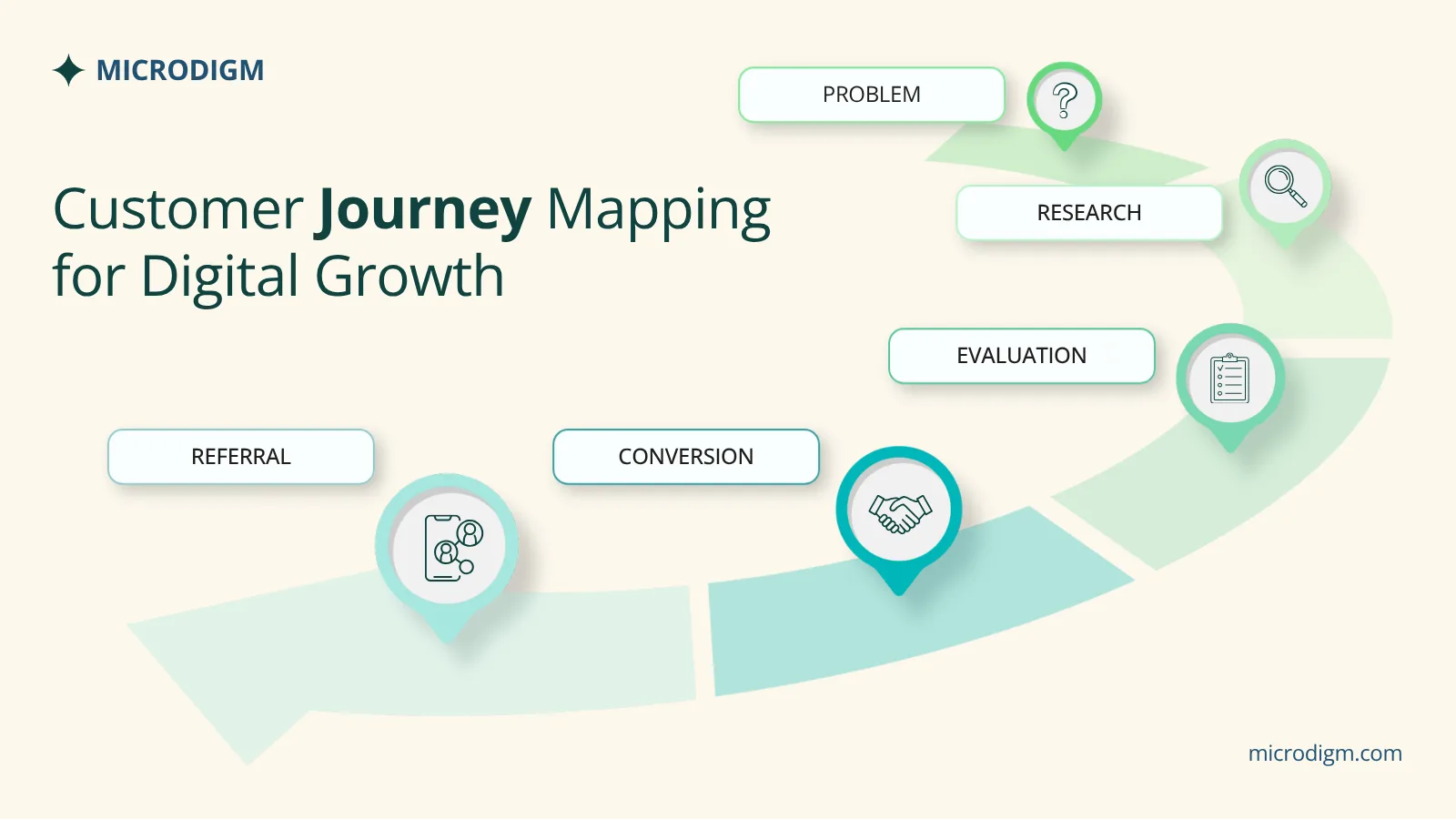
Digital Strategy · 2026-09-07 · 5 min read
Customer journey mapping is the process of documenting how a customer moves from problem recognition to research, evaluation, purchase, use, retention, and referral. A useful map includes customer questions, emotions, touchpoints, content, proof, data, owners, and measurable friction at every stage.
A9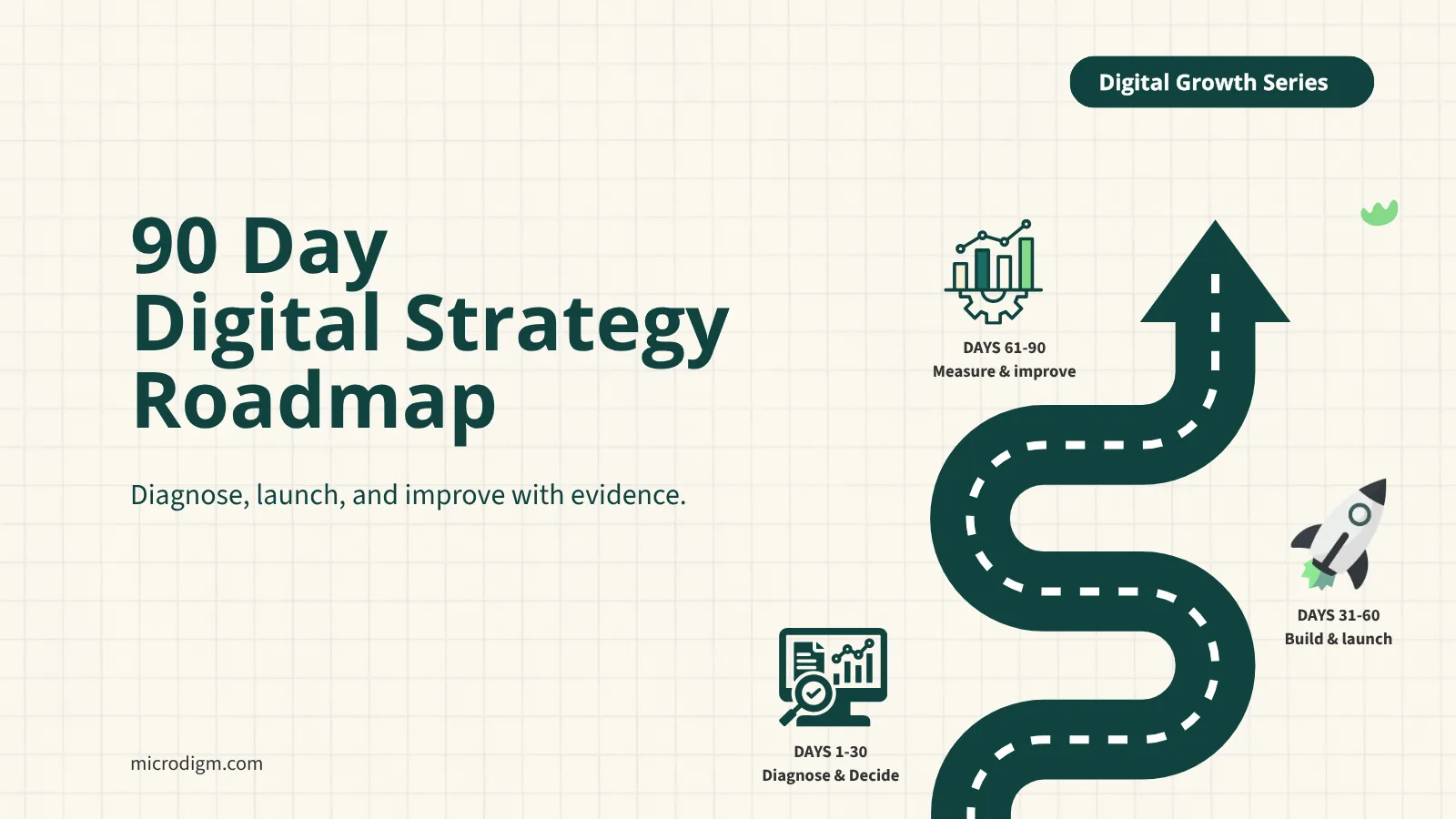
Digital Strategy · 2026-09-04 · 5 min read
A 90-day digital strategy roadmap turns long-term direction into three operating phases: diagnose and decide, build and launch, then measure and improve. Each phase has owned deliverables, clear dependencies, and evidence-based review gates.
Ht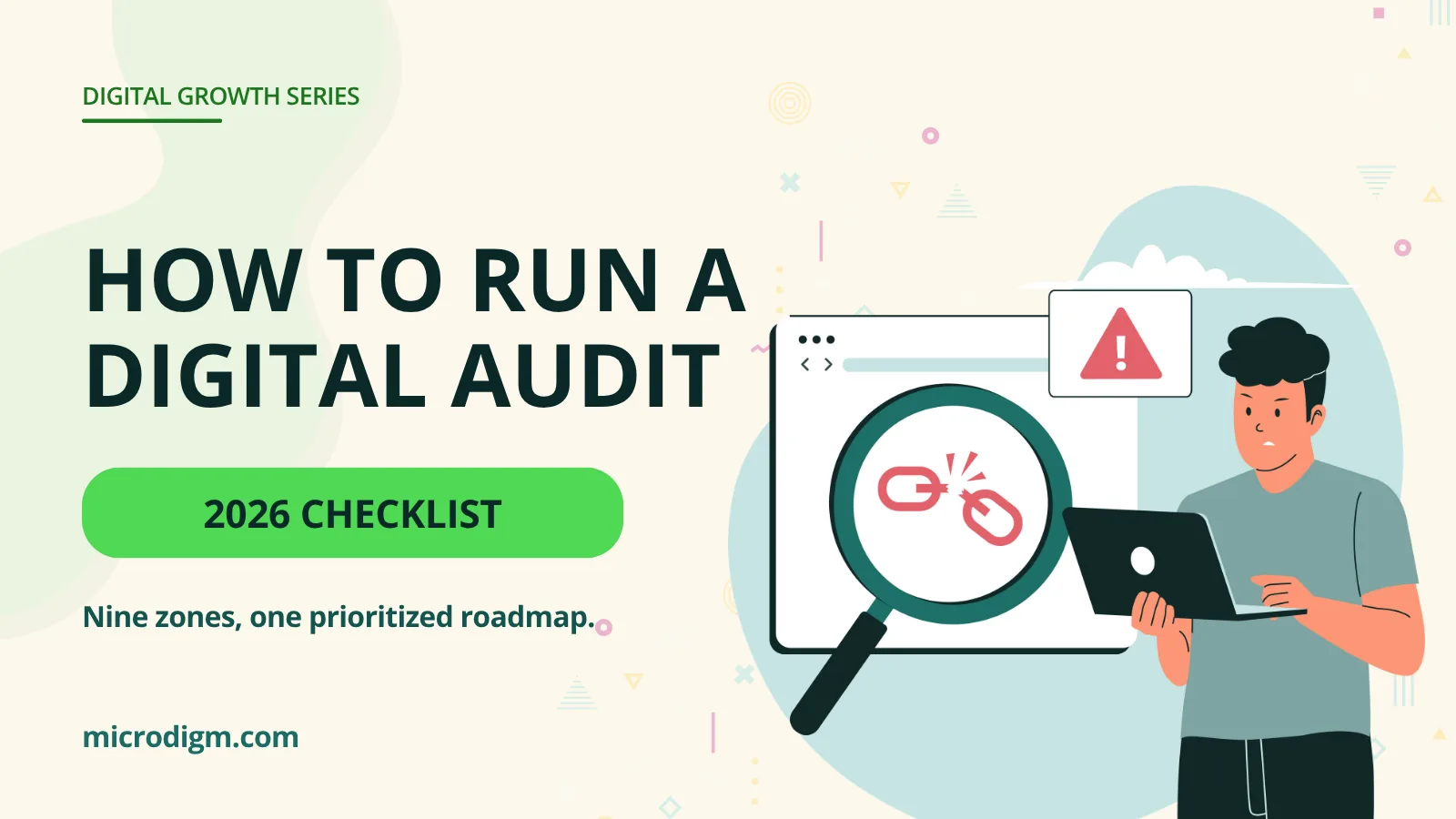
Digital Strategy · 2026-09-01 · 5 min read
A digital audit is a structured review of how a business uses digital channels, experiences, data, and technology to achieve its goals. It identifies performance gaps, broken handoffs, measurement weaknesses, duplicated work, and the few priorities most likely to improve results.
DS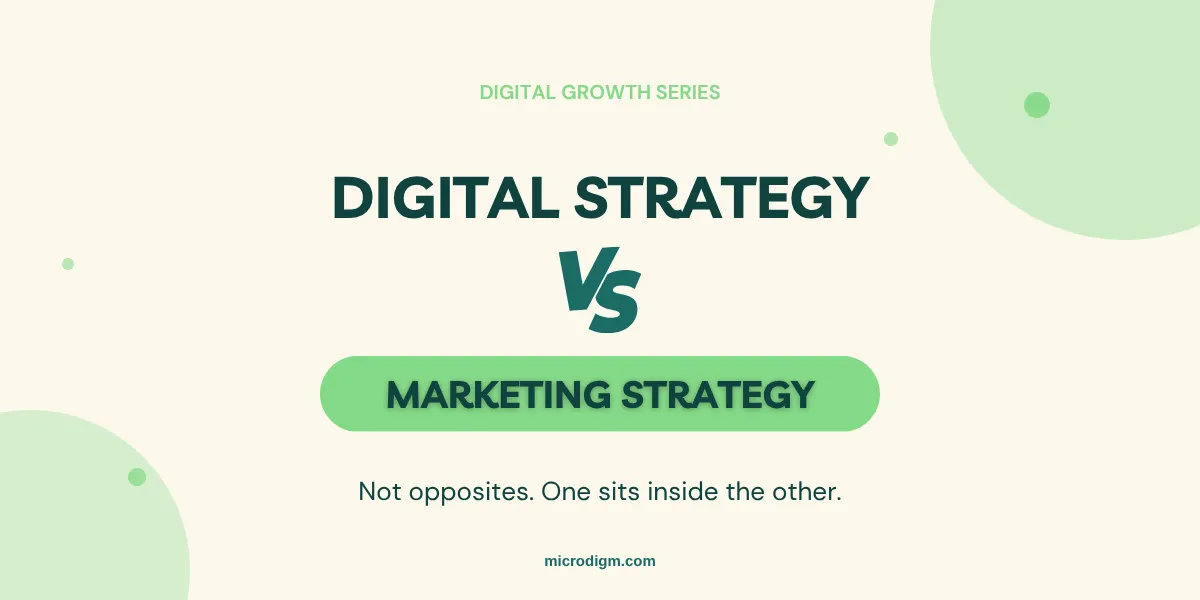
Digital Strategy · 2026-08-16 · 5 min read
Digital marketing strategy explains how a business will create and capture demand through channels. Digital strategy connects those channels to the wider customer experience, website, data, technology, operations, and business goals. Marketing strategy is one part of digital strategy, not a replacement for it.
DS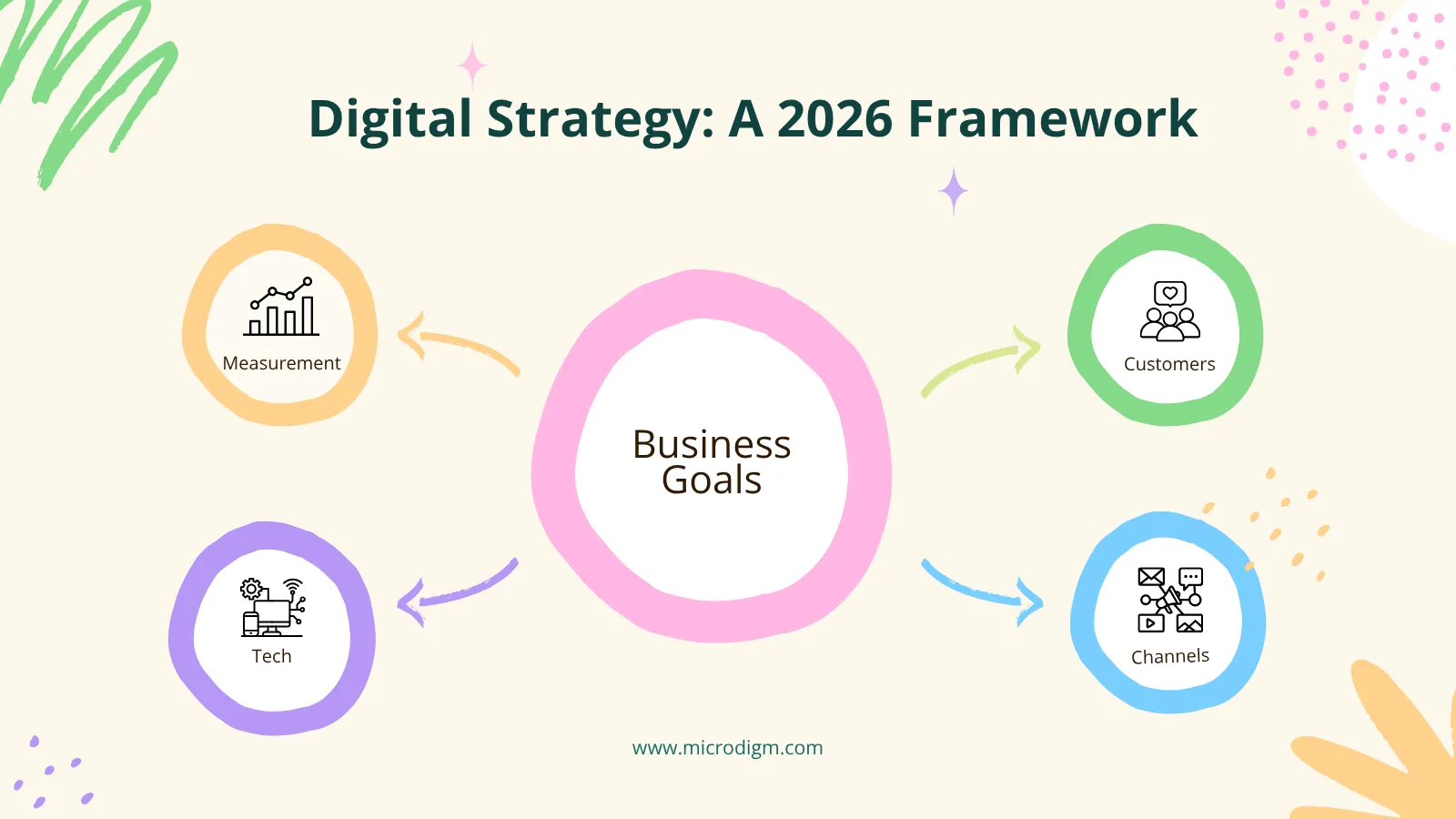
Digital Strategy · 2026-08-11 · 6 min read
A digital strategy is a coordinated set of choices that uses digital experiences, channels, data, and technology to achieve a measurable business outcome. It defines the audience, value proposition, journey, channel roles, operating system, and measurement plan.